Data-driven insights
How we assist waste and environmental services with their data challenges
Within the waste and environmental sector, information originates from many different sources and systems: route planning, sensors, weighing data, customer reports, collection schedules, and external datasets. This fragmented data makes it difficult to gain insight into performance and opportunities for improvement.
Clappform assists waste and environmental services by consolidating data into clear, intuitive dashboards. Real-time insights into waste streams, fill levels, route efficiency, and service quality enable proactive management and continuous improvement.

Our promise
clappform.probines AI, data integration, and accessibility
Common Ground Standards
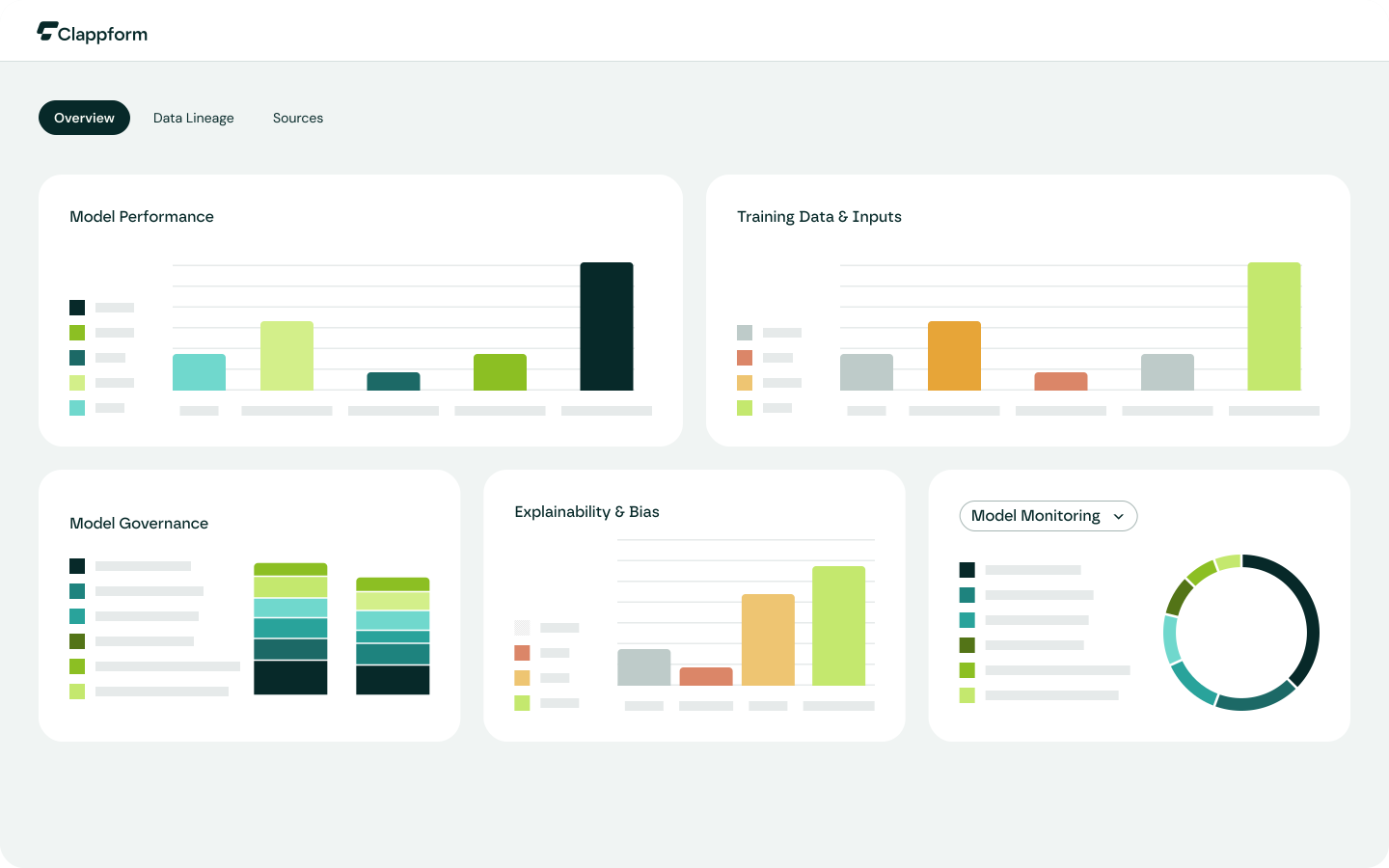
Based on the Common Ground principles of the VNG. With a focus on data reuse, modular development, and open standards to foster efficient collaborations.
Data quality as a starting point
By utilizing direct integrations and accessing data at the source, information remains up-to-date, reliable, and immediately applicable.
Low-code application
With a low-code front-end, we create tailored flexible solutions for our clients. Visualizing solutions on interactive maps? No problem.
Data-driven insights
The power of Data Management
Data platform for the waste management industry
The data platform provides waste and environmental services with real-time insight into all processes surrounding collection, waste streams, and service delivery. Through maps and dashboards, teams can manage route efficiency, fill levels, service quality, and environmental performance. This enables faster detection of bottlenecks and supports data-driven decision-making.
Visual dashboards for routes, volumes and locations
Supports operational planning and policy development
Benchmarking across neighbourhoods, municipalities, or collection areas

Data Catalogue for the waste management sector
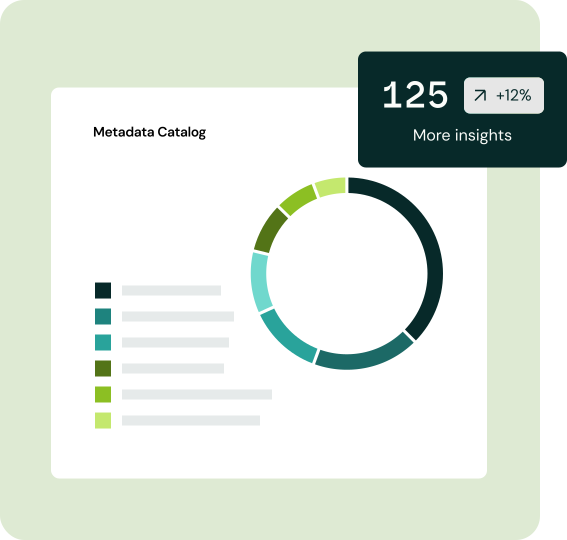
The Data Catalogue centralises all data assets within the waste management industry in a single, well-organised environment. Employees can easily see which datasets are available, how they are used, and who is responsible for their management and topicality. This creates transparency, improves collaboration, and makes data-driven working significantly more efficient.
Central overview of all datasets and definitions
Insight into origin, quality, and update frequencies
Supports governance and uniform data standards